

Choosing recycled paper is a smart move, but for many businesses it's also where the sustainability conversation stops. If your organization has meaningful environmental goals, the real opportunities lie in how you design, order, produce, and deliver your print. At Independent Graphics, we help businesses across Northeastern Pennsylvania see the whole picture. Here's where to focus.
Does the Printing Process Itself Affect Sustainability?
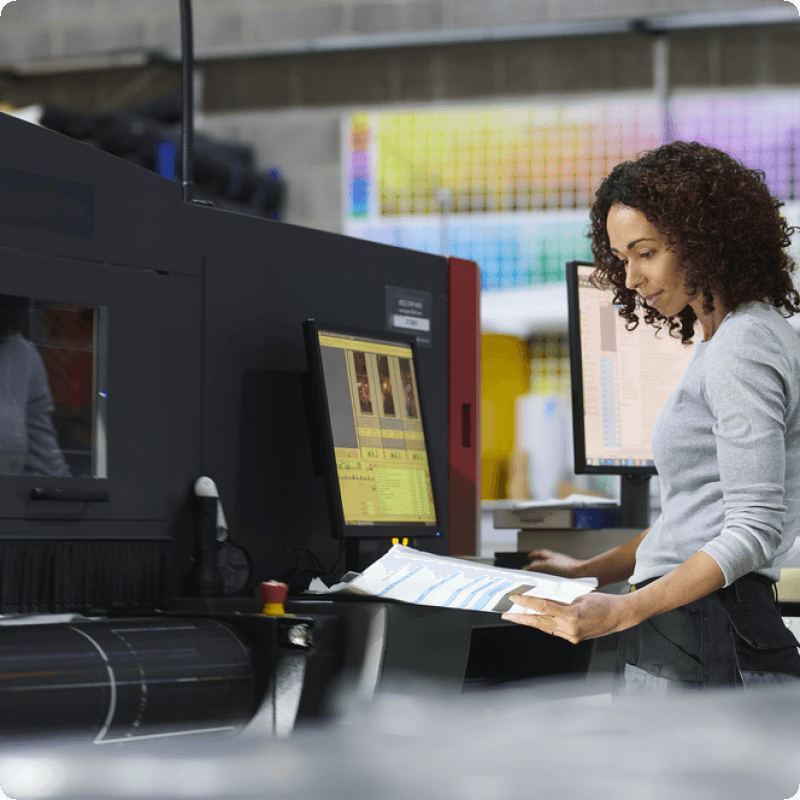
Yes, and it's one of the most overlooked factors. The way ink is applied and dried determines how much energy a job uses and what it releases into the air. In May 2026, Independent Graphics installed a new RMGT 920PF4 LED UV press that cures ink instantly with LED light. Compared with conventional UV lamp systems, it uses 87% less energy, produces no ozone emissions, and releases no harmful gases during printing. The inks are fully recyclable, and setup requires fewer make-ready sheets. On a 10,000-piece nonprofit mailer, that means roughly 200 fewer sheets used just to get the job ready.
How Much Waste Comes from Ordering Too Much?
More than most businesses realize. Ordering 2,000 brochures when you only need 400 leads to storage costs, outdated information, and boxes of pieces that end up recycled without ever reaching a customer. Shorter runs let you print closer to actual demand. Custom online storefronts take it further by letting your team order approved materials as needed, and variable data printing lets you tailor each piece, so you waste less on the wrong audience.
Can Your Design Reduce Your Environmental Impact?
Absolutely. Heavy ink coverage, awkward sizes that waste paper, and unnecessary coatings all add to a job's footprint. Small adjustments made before files go to press, such as a size that fits the press sheet more efficiently, can lower that impact without changing the finished look.
When Is a Coating Actually Worth It?
Only when the piece truly needs protection. Laminates and some specialty finishes add a plastic layer that complicates recycling and increases cost. Uncoated paper is often the more sustainable choice, and with LED UV printing it looks better than ever. The ink sits on top of the sheet instead of soaking in, so detail stays sharp and color stays true.
Why Should You Consolidate Your Mailings?
Each separate campaign adds another print run, another postage bill, and more waste. Combining related messages into fewer, well-planned mailings reduces all three. For example, a school might pair an event invitation with an annual giving update in a single piece.
Are You Considering the Entire Supply Chain?
Paper, inks, coatings, and shipping each carry their own environmental footprint. Choices made at the specification stage ripple through the entire chain. Working with a local printer keeps transportation short and makes it easier to plan jobs efficiently from start to finish.
Small Choices That Add Up
Sustainable printing is a series of decisions, and most of them improve quality and cost rather than compromise them. With design, printing, finishing, and mailing services under one roof and a new LED UV press, Independent Graphics is ready to help you print responsibly without settling for less.
Frequently Asked Questions
What is LED UV printing?
LED UV printing uses LED light to cure ink instantly as sheets leave the press. Pieces can move straight to finishing with no drying time and no spray powder.
Is LED UV printing better for the environment?
It offers several advantages, including far lower energy use than conventional UV lamp systems, no ozone emissions, fully recyclable inks, and less paper waste during setup.
Does uncoated paper look good in print?
Yes, especially with LED UV printing. Because the ink cures on the surface instead of absorbing into the paper, uncoated stocks deliver sharper detail and more consistent color.

