

Every direct mail campaign depends on three fundamentals: the right list, a clear message, and a strong call to action. But the physical qualities of a mail piece matter too. Size, shape, paper, texture, and color all influence whether someone picks up your mailer first or sets it aside. Independent Graphics produces direct mail for businesses throughout New York, Pennsylvania, New Jersey, and beyond. Here are five ways to give your next piece an edge.
Does the Size of a Mailer Affect Response?
It can. A standard postcard size keeps postage costs low, making it a smart choice for frequent or high-volume mailings. A larger or unusually shaped piece costs more to mail, but it’s hard to miss in a stack of ordinary envelopes. If it’s the first thing someone reaches for, the extra postage may pay for itself. The right choice depends on your budget, your audience, and how much attention the offer needs.
Why Does Paper Weight Matter in Direct Mail?
People often judge a brand by how its mail feels in their hands. A thin, flimsy card can suggest a low-budget offer, while a heavier stock signals quality and confidence. That impression often carries over to the product or service being promoted. When your mailer feels substantial, it tends to get a closer look.
How Can Texture Help a Mail Piece Get Noticed?
Most mail feels the same: smooth and forgettable. A textured or specialty finish breaks that pattern the moment someone touches it. Options range from high gloss to uncoated stocks with a natural feel to specialty materials. With its new RMGT LED UV press, Independent Graphics can print on uncoated, synthetic, and metalized papers that are difficult to handle with conventional offset printing, which opens more ways to make a mailer memorable.
Is Personalization Worth Adding to Direct Mail?
Yes, even in small doses. Adding a recipient’s name to the front of a card creates a moment of recognition that a generic piece can’t match. That moment may only last a second, but it’s often enough to move your mailer from the recycling pile to the kitchen counter. Variable data printing makes it easy to go further by tailoring offers, images, or messages to different groups on your list.
Should You Print Direct Mail on Colored Paper?
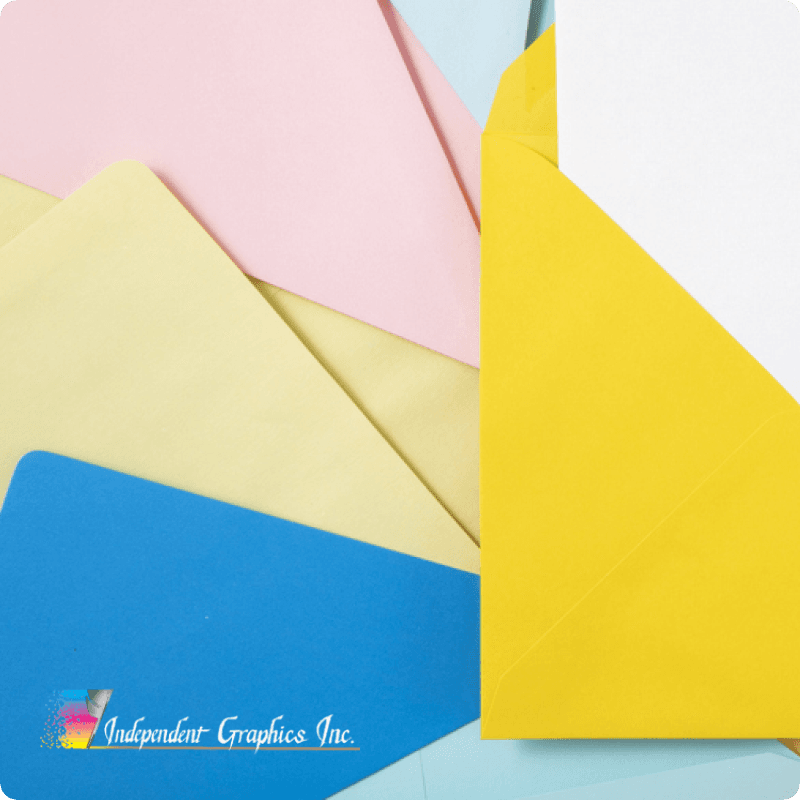
It’s worth considering. Most mail arrives on white paper, so a bold colored stock stands out right away. Picture a mailbox full of white envelopes and one bright red mailer with crisp white lettering. Which would you pick up first? Reversed-out type and strong graphics on a vivid background can make the effect even more striking.
Ready to Try Something New?
The most effective mail pieces combine a strong message with physical details that invite people to pick them up. If you’ve been mailing the same format for years, testing a new size, stock, or finish could be the change that lifts your results. From design and variable data printing to finishing and mailing services, Independent Graphics can help you plan a mailer that gets noticed. Contact our team to get started.
Frequently Asked Questions
What size direct mail piece gets the most attention?
Larger and nonstandard sizes tend to stand out more because they look different from typical mail. They cost more to send, so it’s best to weigh the added visibility against your postage budget.
Does heavier paper improve direct mail results?
Heavier stock gives a mailer a higher quality feel, and recipients often connect that impression with the brand and its offer.
What is variable data printing?
Variable data printing changes text, images, or offers from one piece to the next within the same print run, so each recipient can receive a more relevant message.

